
Countersunk Hex Socket Bolts: How They Differ, Their Eco-Role, and Coming Developments
In the vast world of fasteners, countersunk hex socket bolts stand out for their unique blend of functionality and adaptability. Beyond their basic role of holding materials together, they have distinct characteristics that set them apart from other fasteners, play a part in sustainable engineering, and are evolving with new technologies.
What Makes Them Different from Other Fasteners?
It’s easy to confuse countersunk hex socket bolts with other types, but key differences matter:
- Versus Flat Head Bolts: While both aim for a flush surface, flat head bolts often use slotted or Phillips drives, which can’t handle as much torque as the hex socket. This makes countersunk hex socket bolts better for high-stress uses.
- Versus Button Head Bolts: Button head bolts have a rounded, low-profile head but don’t sit completely flush. They’re good for light loads where some protrusion is acceptable, unlike countersunk bolts, which are essential when a totally smooth surface is needed.
- Versus Socket Cap Screws: Socket cap screws have a cylindrical head that sits above the surface, making them unsuitable for applications where protrusions cause problems. Countersunk designs solve this by disappearing into the material.
Understanding these differences ensures you pick the right fastener, avoiding costly mistakes in projects.
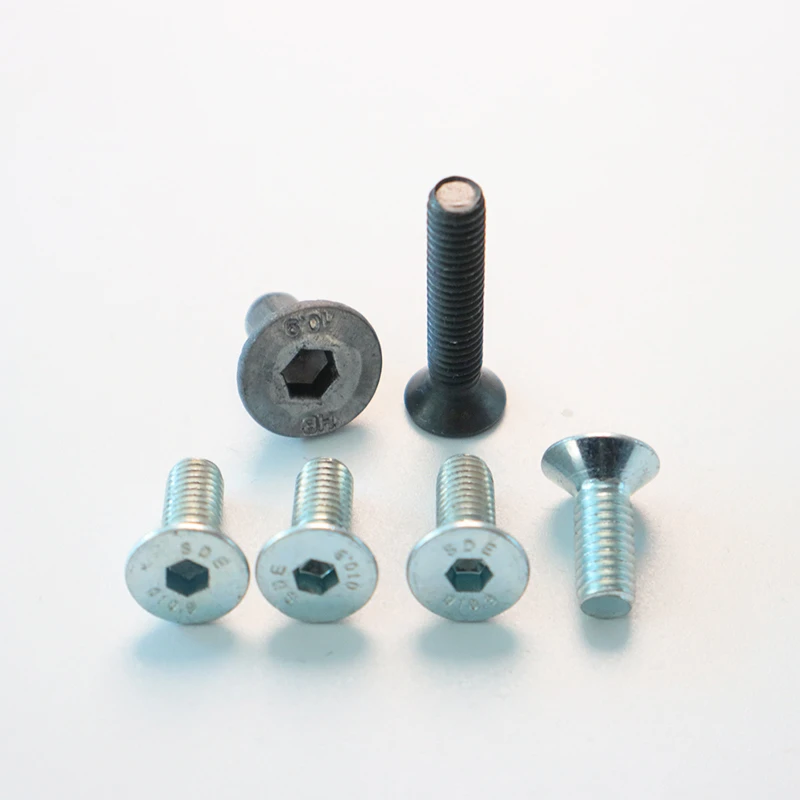
Countersunk Hex Socket Bolts in Green Engineering
Sustainability is a growing focus in manufacturing, and these bolts contribute in several ways:
- Material Efficiency: Their design uses just enough material to ensure strength, reducing waste during production compared to bulkier fasteners.
- Longevity: Made from durable materials like stainless steel, they resist wear and corrosion, meaning fewer replacements over time—lowering the overall environmental footprint.
- Recyclability: Many of the metals used (e.g., steel, aluminum alloys) are fully recyclable, aligning with circular economy goals in green construction and manufacturing.
Future Trends in Their Design and Use
As technology advances, we’re seeing exciting developments:
- 3D-Printed Variants: Custom sizes and shapes can now be 3D-printed for niche applications, reducing lead times and material waste.
- Smart Coatings: New coatings not only boost corrosion resistance but also include self-healing properties, extending bolt life in extreme environments.
- Integration with Digital Tools: Engineers use 3D modeling software to optimize countersunk bolt placement in designs, ensuring maximum strength with minimal material use.
These trends highlight how even small components like countersunk hex socket bolts are evolving to meet the needs of a more efficient, sustainable world.
To explore the latest in fastener technology and sustainable engineering solutions, visit https://hardhawk.cn/.